SEO in the AI Search Era: Why Massive Multi-Page Websites Are a Thing of the Past
Zero-click search is near 60%, ChatGPT and Perplexity answer before users ever leave the chat, and Google's AI Overviews summarize your site without sending the click. Here's what actually wins in 2026 — and why one focused link-in-bio page beats a 200-page website for most creators and small businesses.
For twenty years, the SEO playbook was the same: build a giant website, spin up a page for every keyword, internal-link the whole thing, and wait for Google to send traffic. In 2026 that playbook is quietly dying. Zero-click searches now sit around 58–60% of all Google queries. ChatGPT, Perplexity, Claude, Gemini, and Google's own AI Overviews answer most questions inside the chat — the user never clicks through to anyone's website. The era of farming traffic with 200 thin pages is over.
That doesn't mean SEO is dead. It means the shape of the winning page has changed. The new front door to your brand isn't a sprawling sitemap — it's one focused, well-structured page that both humans and AI models can read, cite, and recommend in seconds. For most creators, freelancers, and small businesses, that page is a link in bio, not a 30-tab CMS.
Ahrefs analyzed 1.9M AI Overview citations and found 76% come from pages already ranking in Google's top 10. AI search isn't a separate channel — it's a filter on top of classic SEO that rewards clarity, structure, and trust, and ignores bloat.
What actually changed (in plain English)
Three big shifts happened at the same time, and together they made the old multi-page strategy obsolete for most small operators.
- 1AI answers replaced the blue links. Google's AI Overviews and AI Mode, ChatGPT search, Perplexity, and Copilot now answer in the result itself. Users get the summary, not the website.
- 2Zero-click is the default. Roughly 6 out of 10 searches end without anyone clicking through. The traffic you used to get from long-tail keyword pages mostly evaporated.
- 3LLMs read the web like a person, not a crawler. They look for clear answers in one place, not 14 internal links spread across a content silo. Long, padded posts hurt you instead of helping.
Why giant multi-page websites are losing
Big sites still exist — Wikipedia, news outlets, major e-commerce — and they're fine. The problem is the millions of small business and personal sites that copied that structure without the audience, authority, or budget to maintain it. In an AI-first search world, those sites have four fatal weaknesses:
- Thin, duplicated pages confuse LLMs about which one to cite — so they cite none of them
- Slow load times and bloated layouts get skipped by AI crawlers and mobile users alike
- Important info (hours, services, contact, pricing) is buried 3 clicks deep instead of answered immediately
- Most pages have zero backlinks, zero engagement, and zero reason to exist — pure crawl-budget waste
In 2026, one page that answers the question beats one hundred pages that almost do.
What AI search engines actually reward
Strip away the acronyms — AEO, GEO, AIO — and the shared playbook is straightforward. LLM-driven search engines want pages that are easy to extract, easy to trust, and easy to summarize. That's it.
- 1Clear single-topic pages with one obvious purpose per URL
- 2Direct answers near the top — not buried under 800 words of intro
- 3Real entities: a real person or business, with a name, location, contact, and proof
- 4Structured data (Schema.org), clean meta tags, semantic HTML, and a real <h1>
- 5Mobile-first speed — under 2 seconds to interactive on a real phone
- 6Mentions and links from other trusted places (social bios, directories, partners)
Answer Engine Optimization, Generative Engine Optimization, AI Optimization — they're all names for the same shift: write for a model that summarizes, not a crawler that ranks ten blue links. Google's own 2026 AI Search Guide literally calls AEO and GEO 'still SEO'.
Why a single link-in-bio page is the perfect AI-era homepage
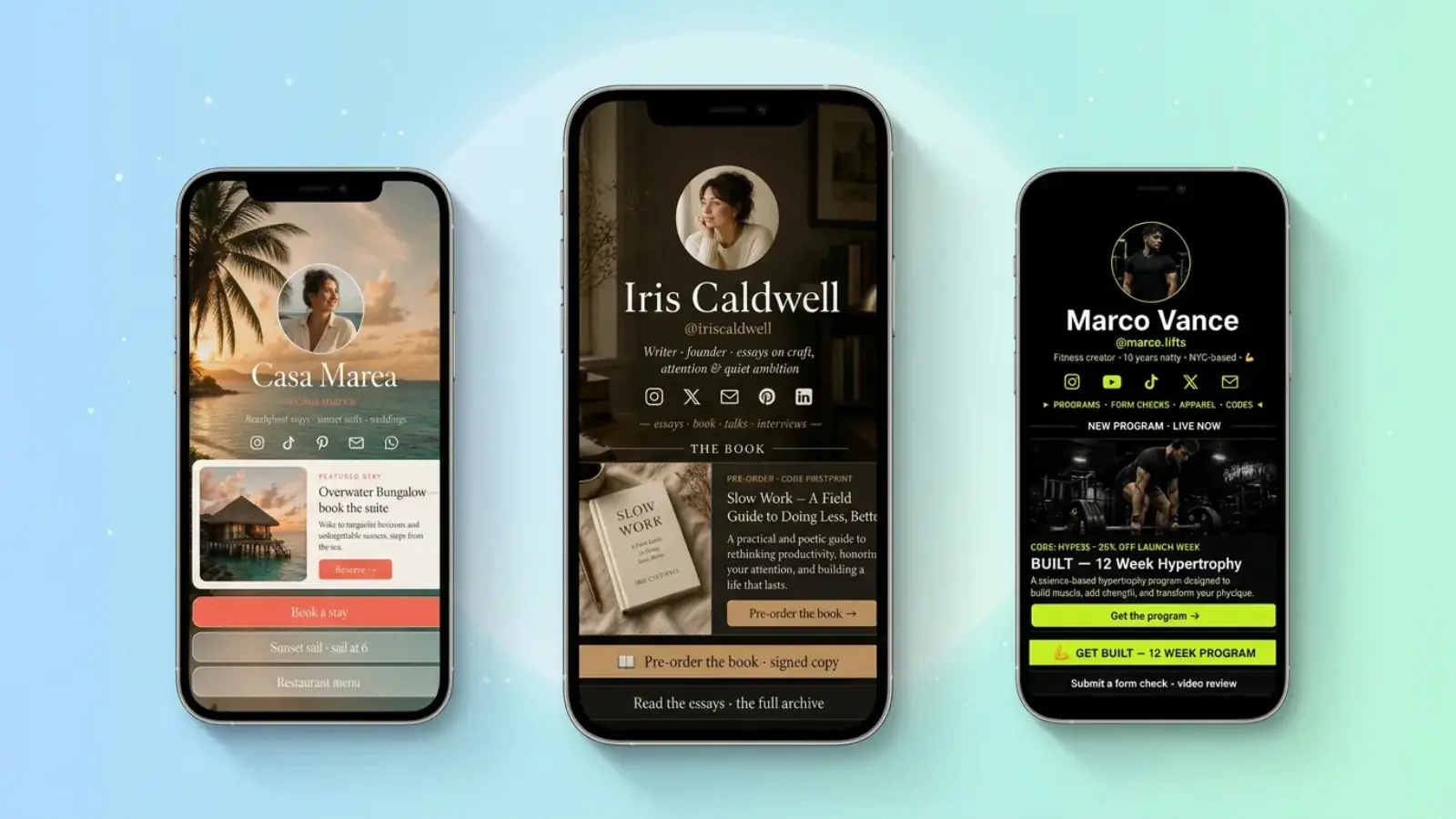
A good link-in-bio page is, accidentally, exactly what AI search engines want: one URL, one entity, one clear purpose, mobile-first, fast, and packed with the highest-signal information about a person or business. No filler. No nine-level navigation. No abandoned blog category from 2019.
- One canonical URL per person or brand — easy for LLMs to associate with your name
- Your bio, services, location, and links all in a single extractable place
- Fast static rendering and clean HTML — friendly to GPTBot, ClaudeBot, PerplexityBot, Googlebot
- Direct CTAs (book, shop, contact, follow) replace the multi-page funnel entirely
- Updates in seconds — no CMS migration, no rebuild, no dev ticket
How TinyBio.me is built for AI search
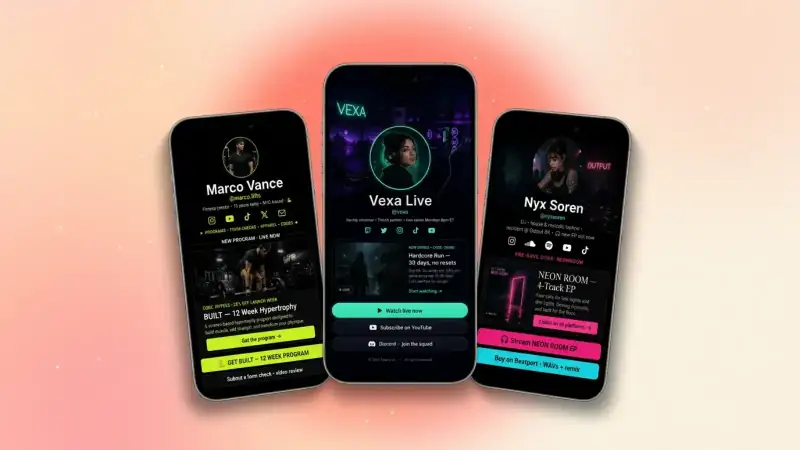
TinyBio pages aren't just pretty link lists. They're engineered to be indexable and citable by both Google and modern AI engines. Every page you publish gets the SEO scaffolding that used to require a developer.
- Server-rendered HTML so crawlers and LLMs read your real content, not an empty React shell
- Per-page title, meta description, canonical, Open Graph, and Twitter cards
- Auto-generated sitemap.xml that pings search engines whenever you publish
- AI-assisted meta titles and descriptions written from your bio and category
- Clean, single-<h1> structure with semantic blocks (FAQ, testimonials, services, contact)
- Mobile-first design hitting Core Web Vitals out of the box
- Public profiles indexable by default — toggle privacy on if you ever need it
Every public TinyBio page is reachable by the major AI crawlers — GPTBot, ClaudeBot, PerplexityBot, and Google-Extended — so when someone asks ChatGPT or Perplexity for 'a yoga teacher in Lisbon' or 'best taco truck in Austin', your page is part of the answer pool.
What to actually put on your page so AI cites you
Treat your TinyBio like the one page a language model would ever need to recommend you. Give it the answers in the order an LLM would want them.
- 1A real name + one-sentence description of who you are and who you help
- 2Location and service area, if relevant (huge win for local AI search)
- 3Your offer or product written in plain language — what, for whom, how much
- 4A short FAQ block with 4–6 real questions you get asked weekly
- 52–3 testimonials with the customer's real first name and outcome
- 6Direct contact: email, booking link, WhatsApp, or contact form
- 7Links out to your social profiles for entity reinforcement
Does this mean you should delete your website?
Not always. If you're a publisher, an e-commerce store with hundreds of SKUs, or a SaaS with deep documentation — keep the big site, but treat your bio link as the cleaner, faster, AI-friendly homepage that points into it. For everyone else (creators, coaches, freelancers, local businesses, restaurants, realtors, services), one TinyBio page does the job of an entire website in 2026, and does it better in AI search.
Internal links for the curious
If you want to go deeper, these are the best places to start: a step-by-step on optimizing your TinyBio for maximum SEO, a look at why your website isn't generating leads, and the broader case for why every small business needs a link in bio.
Your 15-minute AI-search-ready setup
- 1Create a free TinyBio page and claim your real name as the URL
- 2Write a one-sentence bio that says exactly what you do and for whom
- 3Add your location or service area if you serve a specific place
- 4Add one primary offer button and one secondary action (contact / book)
- 5Add a 4-question FAQ answering the things people Google about you
- 6Drop 2 testimonials with real names and outcomes
- 7Use the built-in AI to generate your SEO title and description
- 8Link your TinyBio from every social bio you own — that's your backlink graph
Spin up a TinyBio in under two minutes — free forever, mobile-first, SEO and AI-ready by default. The future of search rewards focused pages. Make yours one of them.
Build a bio link page that converts
Free, beautiful, fast. Drag, drop, share — your audience does the rest.
Create your TinyBio